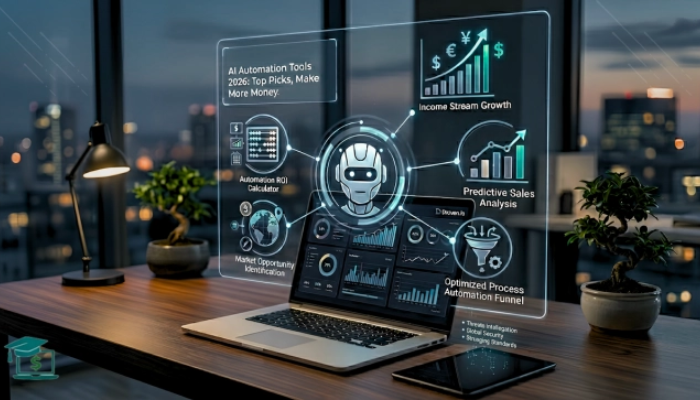
In today’s rapidly evolving digital landscape, droven.io ai technology represents a growing wave of innovation centered on artificial intelligence, automation, and intelligent data-driven systems. As businesses and developers continue to adopt AI-first strategies, platforms and ecosystems associated with advanced AI technologies are becoming essential for improving efficiency, scalability, and decision-making. The concept of droven.io ai technology is often discussed in the context of intelligent automation frameworks that aim to simplify complex workflows while enhancing productivity.
What makes droven.io ai technology particularly compelling is its alignment with modern demands for speed, accuracy, and adaptability. Whether applied in software development, business operations, or data analytics, AI-driven systems are redefining how digital ecosystems function. This article explores the core ideas, features, applications, and future potential of droven.io ai technology, offering a comprehensive look at how it contributes to the next generation of intelligent solutions.
Understanding droven.io ai technology and Its Core Framework
The foundation of droven.io ai technology lies in its conceptual approach to artificial intelligence integration across digital systems. At its core, it represents a structured way of combining machine learning models, automation tools, and intelligent data processing to create adaptive digital environments. These environments are designed to respond dynamically to user input, system behavior, and evolving data patterns.
In practical terms, droven.io ai technology is often associated with systems that reduce manual intervention in digital workflows. By leveraging AI algorithms, it can process large volumes of data, identify patterns, and generate actionable insights. This makes it particularly valuable in environments where decision-making speed and accuracy are critical.
Another key aspect of droven.io ai technology is its modular and scalable design philosophy. Rather than relying on rigid structures, AI-driven frameworks like this are built to integrate seamlessly with existing digital infrastructures. This allows organizations to gradually adopt AI capabilities without completely overhauling their systems, making transformation more accessible and cost-effective.
Furthermore, the technology emphasizes continuous learning. Through machine learning mechanisms, systems associated with droven.io ai technology can evolve over time, improving performance based on historical data and user interactions. This adaptive nature is what positions it as a powerful tool in modern AI ecosystems.
Key Features and Capabilities of droven.io ai technology
One of the most defining features of droven.io ai technology is its intelligent automation capability. This feature allows repetitive and time-consuming tasks to be handled by AI-driven systems, reducing human workload while increasing efficiency. From data entry to workflow optimization, automation plays a central role in improving operational performance.
Another major capability is predictive analytics. droven.io ai technology is often associated with systems that can analyze historical data and predict future trends. This is particularly useful in industries like finance, marketing, and supply chain management, where anticipating changes can lead to better strategic decisions.
In addition to automation and analytics, natural language processing (NLP) is another key component. AI systems built around droven.io ai technology can interpret and respond to human language, enabling more intuitive interactions between users and machines. This enhances usability and makes AI systems more accessible to non-technical users.
Lastly, scalability and integration flexibility are core strengths. droven.io ai technology is designed to work across multiple platforms and environments, allowing businesses to integrate AI tools into existing systems with minimal disruption. This adaptability ensures that organizations of all sizes can benefit from advanced AI capabilities.
Applications of droven.io ai technology Across Industries
The versatility of droven.io ai technology makes it applicable across a wide range of industries. In the business sector, it is often used to optimize operations, automate customer service, and enhance decision-making processes. Companies leverage AI-driven insights to improve productivity and reduce operational costs.
In the healthcare industry, droven.io ai technology can support diagnostic systems, patient data analysis, and treatment recommendations. By processing large datasets quickly and accurately, AI systems help medical professionals make more informed decisions and improve patient outcomes.
The financial sector also benefits significantly from droven.io ai technology. It is used for fraud detection, risk assessment, and algorithmic trading. By analyzing transaction patterns and market trends, AI systems can identify anomalies and provide real-time insights that enhance financial security and profitability.
Additionally, the technology plays a major role in e-commerce and digital marketing. Personalized recommendations, customer behavior analysis, and automated marketing campaigns are all powered by AI systems similar to those associated with droven.io ai technology. This leads to improved user engagement and higher conversion rates.
Benefits of droven.io ai technology for Businesses and Developers
One of the primary benefits of droven.io ai technology is increased efficiency. By automating repetitive tasks and streamlining workflows, businesses can significantly reduce the time and resources required to complete operations. This allows teams to focus on more strategic and creative tasks.
Another important benefit is enhanced decision-making. With access to real-time data analysis and predictive insights, organizations can make more informed decisions. droven.io ai technology enables data-driven strategies that reduce uncertainty and improve overall business performance.
For developers, this technology offers a flexible and scalable environment for building intelligent applications. The modular nature of AI systems allows developers to integrate advanced features such as machine learning, NLP, and automation without building everything from scratch.
Cost reduction is also a significant advantage. By minimizing manual labor and optimizing processes, businesses can lower operational expenses. Over time, the return on investment for implementing AI-driven systems becomes increasingly valuable, especially in competitive markets.
Future Potential and Trends of droven.io ai technology
The future of droven.io ai technology is closely tied to the broader evolution of artificial intelligence and digital transformation. As AI models become more advanced, we can expect even greater levels of automation, accuracy, and personalization in digital systems.
One emerging trend is the integration of AI with edge computing and IoT devices. This will allow droven.io ai technology–like systems to process data closer to the source, reducing latency and improving real-time decision-making capabilities. This shift will be particularly impactful in industries like manufacturing and smart cities.
Another future direction involves the rise of autonomous systems. AI technologies are gradually moving toward self-managing environments where minimal human intervention is required. droven.io ai technology could play a role in enabling such ecosystems by supporting adaptive learning and autonomous decision frameworks.
Finally, ethical AI and transparency will become increasingly important. As AI systems become more influential, ensuring fairness, accountability, and transparency will be essential. Future developments in droven.io ai technology are likely to incorporate stronger governance frameworks to ensure responsible use.
Conclusion
In conclusion, droven.io ai technology represents a forward-thinking approach to artificial intelligence, automation, and digital transformation. Its emphasis on adaptability, scalability, and intelligent processing makes it a powerful concept in the evolving tech landscape. From business optimization to healthcare innovation and financial intelligence, its applications are broad and impactful.
As industries continue to embrace AI-driven solutions, the importance of technologies like droven.io ai technology will only grow. It stands as a symbol of how artificial intelligence can reshape the future of work, decision-making, and digital ecosystems, paving the way for smarter and more efficient systems.
FAQs about droven.io ai technology
1. What is droven.io ai technology?
It refers to a conceptual AI-driven system focused on automation, analytics, and intelligent digital transformation.
2. How does droven.io ai technology work?
It works by using machine learning, data analysis, and automation to optimize workflows and generate insights.
3. Is droven.io ai technology used in businesses?
Yes, it can be applied in business operations to improve efficiency, decision-making, and automation.
4. What industries benefit from droven.io ai technology?
Industries like healthcare, finance, e-commerce, and technology benefit significantly from AI-driven systems.
5. Does droven.io ai technology use machine learning?
Yes, machine learning is a core component that enables adaptive learning and predictive capabilities.
6. Can developers use droven.io ai technology?
Developers can leverage its concepts to build scalable and intelligent applications.
7. What are the main features of droven.io ai technology?
Automation, predictive analytics, natural language processing, and system integration.
8. Is droven.io ai technology scalable?
Yes, it is designed to integrate and scale across different systems and platforms.
9. What is the future of droven.io ai technology?
It is expected to evolve with advancements in AI, automation, and real-time computing.
10. Why is droven.io ai technology important?
It helps improve efficiency, reduce costs, and enable smarter decision-making in digital systems.